


In Last Z, State Migration allows players to move to a new state, join stronger alliances, and adjust their development path. However, many players fail because they prepare too late, lack enough Migration Passes, misunderstand Migration Score, or miss available slots. Migration is not just a simple move—it depends on your Migration Identity, account strength, peak power, state restrictions, slots, and invitations. Understanding the rules early will make your migration much easier.
When Does State Migration Open in Last Z?
State Migration is not available all the time. It usually opens during the transition period after a season ends.
|
Stage |
Migration Status |
|
During the season |
Usually unavailable |
|
After the season ends |
Migration window opens |
|
Before the new season |
Players can migrate |
The first migration usually becomes available after Season 2, with additional migration events appearing after later seasons.
That means you shouldn’t wait until the migration event starts to prepare. It’s better to start saving Migration Passes, looking for a target state, and contacting alliances before the season ends.
What Is Migration Score?
Migration Score is one of the main factors used to determine your migration tier.
A common mistake is thinking that migration only looks at your current combat power. In reality, the system considers your overall account development.
|
Factor |
What It Includes |
|
Building Power |
Building progression |
|
Research Power |
Technology progression |
|
Hero Power |
Hero development |
|
Vehicle Power |
Vehicle progression |
|
Combat Power |
Current combat strength |
|
Peak Combat Power |
Your highest recorded combat power |
One of the most important factors is Peak Combat Power. The game keeps track of how strong your account has been, so simply lowering your current power before migration will not necessarily lower your migration tier.
For example, if your account once reached 100 million power, dropping to 70 million before migration does not mean the system will treat you as a 70-million-power account.
Migration Identity
Your Migration Score determines your Migration Identity, which is generally divided into four tiers:
|
Tier |
Name |
General Characteristics |
|
Tier 1 |
Regular |
Lowest restrictions |
|
Tier 2 |
Medium |
Higher requirements |
|
Tier 3 |
Advanced |
Fewer slots and more restrictions |
|
Tier 4 |
Elite |
Highest requirements and restrictions |
Depending on the migration cycle or game version, you may see different names such as Common, Intermediate, Senior, or Special.
The exact names may change, but the basic idea remains the same: higher-tier accounts generally face higher costs and tighter migration restrictions.
Migration Tiers Can Change
Migration thresholds are not necessarily fixed forever. They can change depending on factors such as: State age. Current season and Overall development of the state group, also Strength of active players
For example, one migration cycle might use thresholds like:
|
Tier |
Example Power Range |
|
Regular |
0–20M |
|
Medium |
20M–40M |
|
Advanced |
40M–100M |
|
Elite |
100M+ |
Another cycle may use different thresholds. So your migration tier depends not only on your own account, but also on the overall environment of the state group.
Target State Classification and Restrictions
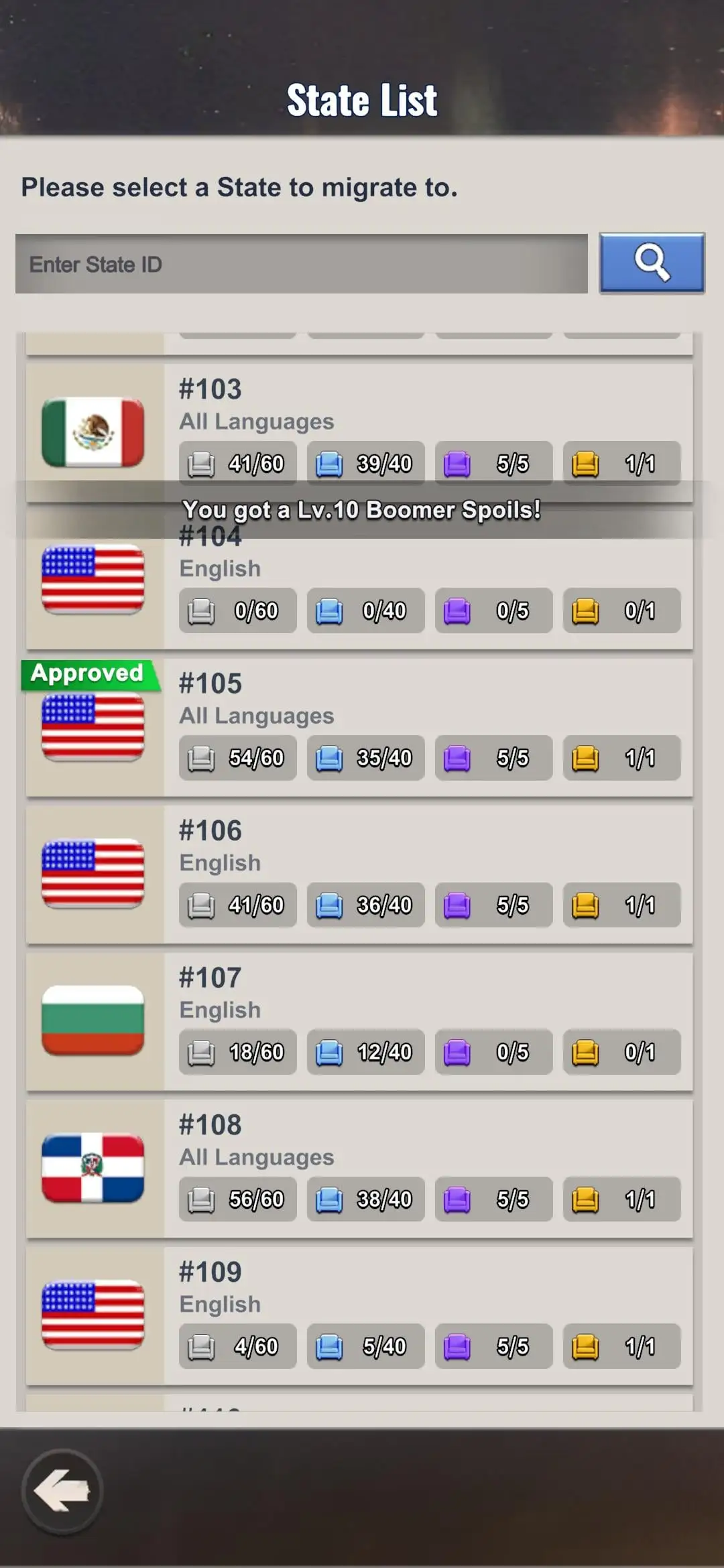
The game also evaluates destination states.
|
State Type |
General Description |
|
Fully Open |
Fewest restrictions |
|
Regular |
Standard migration rules |
|
Semi-Open |
More restrictions |
|
Flourishing |
Strong, highly developed state |
Stronger states generally have more restrictions on incoming players. This helps prevent already powerful states from becoming even more concentrated with high-power accounts.
Migration Pass Requirements
Migration requires Migration Passes, and the number needed depends on your migration tier.
|
Migration Tier |
Passes Required |
|
Regular |
10 |
|
Medium |
15 |
|
Advanced |
20 |
|
Elite |
50 |
This is why F2P players should start preparing well before migration opens. The problem often isn't finding a state to join—it's having enough passes when the migration window arrives.
Three Phases of State Migration
Phase 1: Preparation Phase
This is when you should start planning your move.
You can usually check:
- Available destination states
- Your migration tier
- Required Migration Passes
- Available slots
This is also the best time to contact:
- The President
- R5/R4 players
- Alliance leaders
- Recruitment contacts
Popular states may organize incoming players before the event even begins.
Phase 2: Invitation Phase
During this phase, the destination state's President can send invitations. Eligible players may also submit migration applications.
|
Item |
Time Limit |
|
Invitation/Application |
24 hours |
|
After rejection |
Around 20 minutes before trying again |
If you're targeting a competitive state, don't wait until the last minute.
Phase 3: Free Migration
The final phase is mainly useful for Regular-tier players. If the destination state still has available Regular slots, Regular players can migrate without an invitation.
|
Tier |
Free Migration? |
|
Regular |
Yes |
|
Medium |
Invitation/approval required |
|
Advanced |
Invitation/approval required |
|
Elite |
Invitation/approval required |

Requirements Before Migration
Before you can migrate, you generally need to meet all the required conditions:
|
Requirement |
Required |
|
HQ meets the required level |
√ |
|
Not currently in combat |
√ |
|
No troops outside your base |
√ |
|
Not the President |
√ |
|
Have not already migrated this round |
√ |
|
Not currently in an alliance |
√ |
Conclusion
State Migration isn’t a “pack your bags and leave” trip, especially for F2P players and high-power accounts. Your strength determines your migration tier, your tier determines pass costs and restrictions, and your target state decides whether you have a spot. Save your passes, find the right state, and secure your alliance early to stay ahead. In Last Z, migration isn’t about where you want to go—it’s about being prepared enough to get there.