

Every state in Whiteout Survival runs on its own clock. Two players can log in on the same afternoon, spend the same resources, and yet sit in completely different versions of the game because their states are different ages. Your state's age — measured in days since creation — determines which heroes you can pull, which pets you can tame, which troops you can train, and which events you will face. It is the single most important invisible variable in the game, and most players never think about it until they are already behind.
This guide maps the full server timeline from Day 0 to the Gen 14 era and beyond, with practical notes on what each milestone actually means for your account.
Compare regular in-game prices with current Mone prices to find the right WOS pack for your budget. The popular $4.99 pack currently offers the largest discount. Prices and discounts may change. The current price is always shown on the product page and again before payment.
Why the Server Timeline Matters More Than You Think
Whiteout Survival does not let you play at your own pace. It paces the game for you through a system of generations. Roughly every 80 days, your state unlocks a new batch of Mythic heroes, and newer heroes are almost always stronger than the ones before them. If you spend your Mythic Shards on a Gen 3 hero the week before Gen 4 drops, you have effectively wasted months of resource accumulation.
The same logic applies to Fire Crystal progression. FC1 through FC10 are gated to server age, not personal progress. A player who understands the timeline knows exactly when to stop investing in a hero, when to save gems for the Lucky Wheel, and when to push Furnace upgrades because the next content band is about to open.
There is also a practical reason to track your state age: event rotation. SVS and KOI do not run on personal schedules. They are server-gated, and if your state is younger than Day 80 when they would normally begin, you will experience an additional Hall of Chiefs cycle instead. Knowing your state age tells you which competitive events you are actually eligible for.

How to Check Your Server Age
Whiteout Survival does not display server age directly, but there are three reliable methods.
Method 1 — Consecutive Login Days (VIP Screen). If you have been logging in since your state opened, the VIP screen shows consecutive login days at the top. That number equals your server age. This only works if you never missed a day.
Method 2 — Kindling Embers Monument Task. Open the Monument (left of the Arena, next to the Fishing Hut), go to the achievement tab, and find the completion date for "Kindling Embers." Most states complete this task roughly three days after creation. Subtract 3 days from that date to estimate your server's birthday.
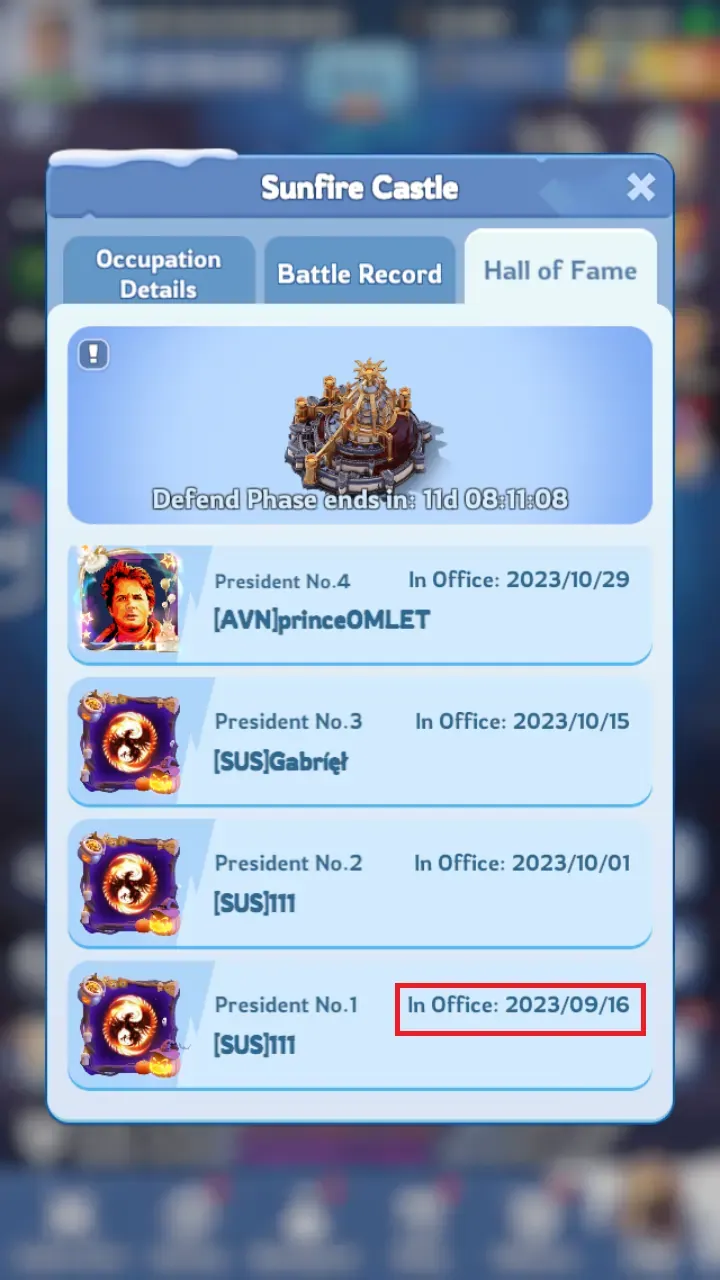
Method 3 — Sunfire Castle Hall of Fame. Go to Castle Battle → Sunfire Castle → Battle Record → Hall of Fame. Find the date when your first president was elected and subtract 55 days. That gives you an approximate server creation date.
Once you have your state age, the timeline below becomes a planning tool rather than trivia.
Day 0–40: The Foundation Phase
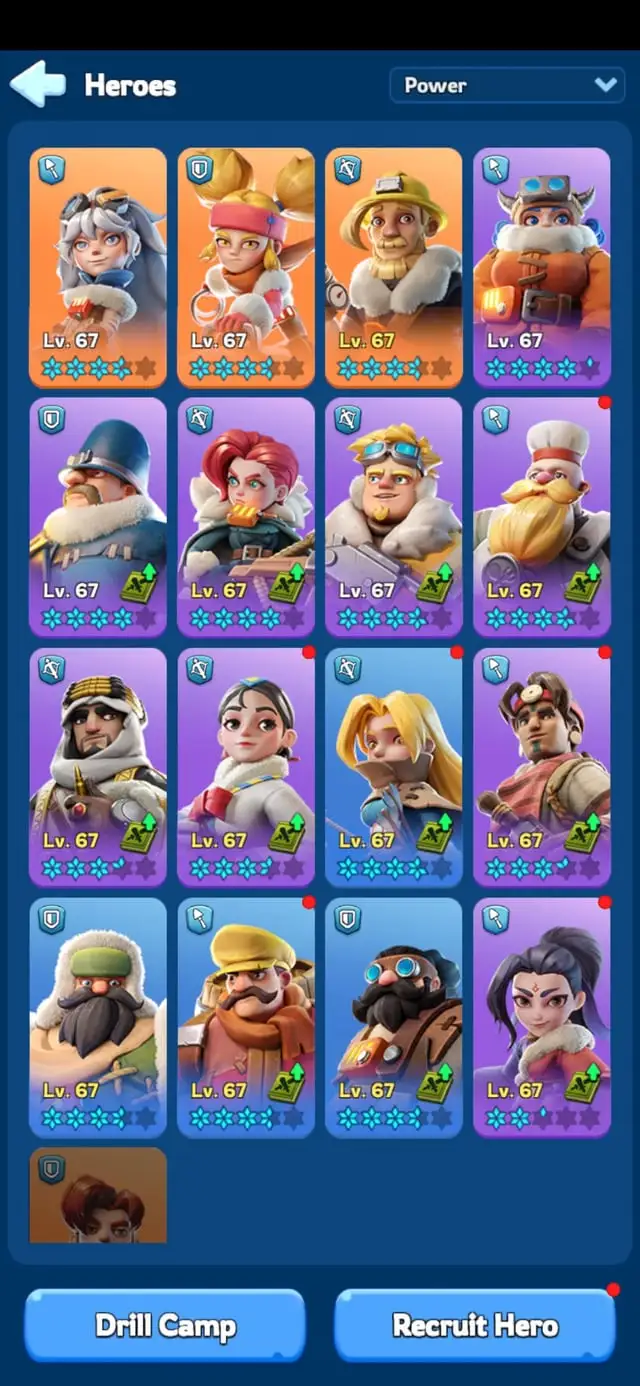
Day 0 — Gen 1 Heroes and the First Map. Your state opens with the original hero pool. The Mythic Gen 1 lineup includes Jeronimo, Natalia, Molly, and Zinman. Early Epic heroes like Sergey, Jessie, Patrick, and Gina form the backbone of your first squads. Polar Terror unlocks immediately, giving alliances their first cooperative combat target.
Day 14 — Tundra Opens. Tundra territory becomes available for alliances. This is the first meaningful territorial expansion and usually triggers the first serious alliance-level competition on your state map.
Day ~34 (Monday) — Arena Opponent Pool Expands. Your Arena opponents are no longer limited to players inside your state. Nearby states enter the pool, which significantly increases Arena difficulty.
Day 39 — Fertile Land Opens. The second map expansion. Fertile Land typically becomes a contested zone between top alliances because of its resource density.
Day 40 — Gen 2 Heroes and Alliance Resource Exchange. This is the first major hero generation shift. Flint (Infantry, Lucky Wheel), Philly (Lancer), and Alonso (Marksman) enter the pool. Flint in particular becomes the go-to rally leader for Polar Terror during this era. Around the same time, Alliance Resource Exchange unlocks, allowing alliances to swap resources internally — a feature that becomes critical for keeping smaller members supplied.
Key decision point: If you are F2P, Gen 2 is when you should start being selective. A fully built Epic hero will usually outperform a barely started Mythic hero. Molly from Gen 1 remains genuinely useful until Mia arrives in Gen 3, so do not abandon her prematurely.
Day 53–150: From Local Politics to Cross-State Competition
Day 53 — Sunfire Castle. Sunfire Castle becomes the battleground for state alliances. Following a presidential election, ministers can be appointed. The Sunfire Castle Battle happens every Saturday. This is your state's first taste of real political structure — the president and ministers gain tangible state-wide buffs, and alliances that control the castle shape the state's direction for weeks.
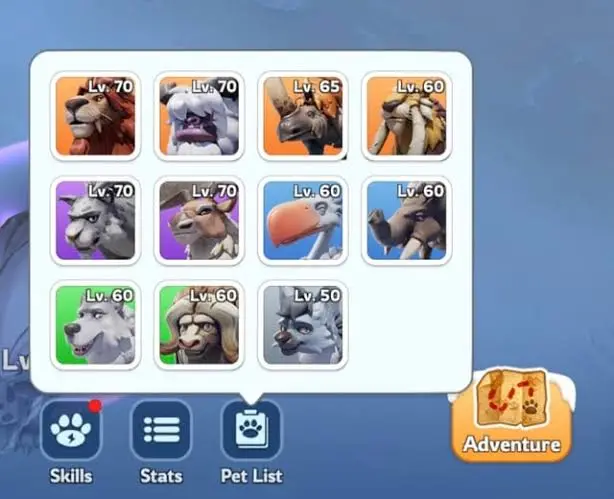
Day 54 — First Pets. The Beast Cage unlocks at Furnace level 18, bringing Musk Ox, Arctic Wolf, and Cave Hyena into the game. Pets are not cosmetic. Their skills affect construction speed, gathering efficiency, and combat performance. Musk Ox in particular is a high-priority early investment for its construction speed buff.
Day 60 — Fire Crystal Age Begins. Completion of the "Road to Discovery" Monument mission unlocks the Fire Crystal Age, granting Furnace level 30 players the ability to enhance buildings beyond their normal caps. FC1 through FC3 become available. This is the beginning of the post-30 progression system that defines the rest of the game.
Day 80 — SVS and KOI Enter the Rotation. State of Power (SVS) and King of Icefield (KOI) begin. These events run on separate timelines and rotate roughly every four weeks. KOI always lands approximately two weeks after SVS concludes. SVS is a direct state-versus-state competition with a 12-hour battle phase on Saturday, while KOI is a 7-day cross-state competition where six states compete across themed daily stages.
Important caveat: If your state is younger than Day 80 when these events would begin, you experience an additional Hall of Chiefs cycle instead. This means two states created a few weeks apart can have radically different event experiences during their first three months.
Day 90 — Gen 2 Pets. Titan Roc and Giant Tapir unlock. Titan Roc is a Rare-rarity pet that becomes a major combat asset, while Giant Tapir supports resource gathering.
Day 120 — Gen 3 Heroes. Greg (Infantry), Logan (Lancer), and Mia (Marksman) enter the pool. Mia is widely regarded as one of the best long-term F2P investments in the entire game — she remains viable through many later generations, and some guides track her usefulness into the double-digit generations. If you are F2P and have been saving gems, Mia is the hero to target on the Lucky Wheel.
Day 140 — Gen 3 Pets. Giant Elk and Snow Leopard unlock. Snow Leopard is particularly valuable for combat-focused players.
Day 150 — Crystal Infrastructure. FC4 and FC5 unlock, along with the Crystal Laboratory. The Crystal Lab introduces refinement systems that allow you to improve Fire Crystal gear and materials. This is also when the second major Fire Crystal band opens, so players who have been pushing Furnace levels should be positioned to take advantage.
Day 180–315: The Mid-Game Power Spike
Day 180 — Legendary Equipment. Chief Legendary Gear unlocks. This is a substantial power jump for your top march and should be a priority for any player who has been stockpiling materials.
Day 195 — Gen 4 Heroes. Ahmose (Infantry), Lynn (Lancer, Lucky Wheel), and Reina (Marksman) arrive. Lynn is typically the F2P-accessible pick from this generation via the Lucky Wheel.
Day 200 — Gen 4 Pets.Snow Ape and Cave Lion unlock. Cave Lion is a notable combat pet for rally-focused players.
Day 220 — War Academy and T11 Troops. This is arguably the most important milestone between Day 100 and Day 300. The War Academy unlocks, bringing Fire Crystal Tech and T11 Helios troops (Infantry, Lancer, and Marksman) into the game. The War Academy requires FC5 and unlocks automatically once your state reaches the required age and your city meets the prerequisite. T11 troops are a significant qualitative upgrade — they have higher base stats and special skills compared to T10, and they fundamentally change how rallies and garrison combat play out.
Day 270 — Gen 5 Heroes. Gwen (Infantry), Hector (Lancer), and Norah (Marksman) arrive. Hector is often cited as the standout combat hero from this generation.
Day 280 — Gen 5 Pets. Iron Rhino and Saber-tooth Tiger unlock.
Day 315 — Advanced Crystal Update. FC6 through FC8 unlock, along with Refined Fire Crystal. The Crystal Lab gains super-refinement options at this stage. This is where Fire Crystal progression becomes genuinely expensive, and players who planned their FC materials from Day 150 onward will feel the difference.
Day 360–520: Late-Game Systems and the Gen 10 Era
Day 360 — Gen 6 Heroes. Renee (Infantry), Wayne (Lancer), and Wuming (Marksman) arrive.
Day 370 — Mammoth Update. The Mammoth becomes available as a new pet or combat element, continuing the Gen 6+ pet expansion.
Day 440 — Gen 7 Heroes. Bradley (Infantry), Edith (Lancer), and Gordon (Marksman) arrive. Older states with active War Academy progression are now firmly in the T11 era.
Day 500 — Crystal Mastery. FC9 and FC10 unlock. This is the final Fire Crystal band for building progression, and it represents the end of the FC grind that began on Day 60.
Day 520 — Gen 8 Heroes. Gatot (Infantry), Hendrik (Marksman), and Sonya (Lancer) arrive. Gen 8 is roughly where the "every 80 days" cadence becomes visibly consistent — Gen 2 at Day 40, Gen 3 at 120, Gen 4 at 195–200, and so on.
Gen 9 Through Gen 14 and Beyond
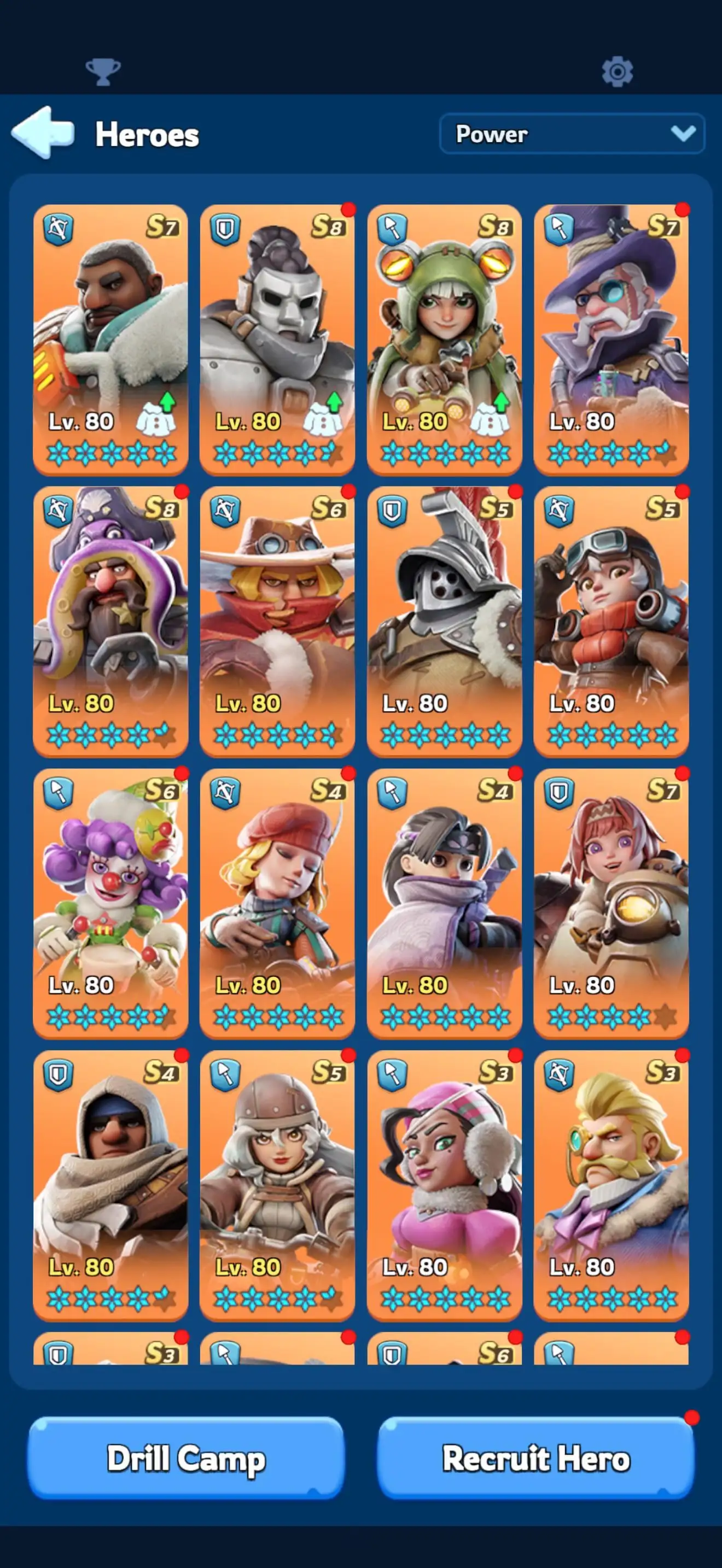
The generation cadence continues predictably into the late game, with some states experiencing slight timing variations due to their completion speed on Monument missions.
|
Generation |
Approximate Day |
Heroes |
|
Gen 9 |
~600 |
Fred, Magnus, Xura |
|
Gen 10 |
~680–700 |
Blanchette, Freya, Gregory |
|
Gen 11 |
~800 |
Eleonora Gold, Lloyd, Rufus |
|
Gen 12 |
~870 |
Ligeia, Karol, Hervor |
|
Gen 13 |
~951 |
Gisela, Flora, Vulcanus |
|
Gen 14 |
~1000–1060 |
Unconfirmed |
Note on Gen 10 timing: some sources list Day 680, others Day 700. The discrepancy comes from individual state progression speed — states that complete Monument missions faster unlock generations earlier. Treat any single-day figure as an approximation, not a countdown timer.
T12 Exalted Troops. T12 troops were added to the game on April 27, 2026, and unlock through a Flame Tech branch in the War Academy. The prerequisites are substantial: your state must be in the Gen 10 era or later, you must have unlocked at least one T11 Helios troop, and your War Academy must be at FC10. Completing all five Tier 1 Exalted research tracks unlocks T12 training.
Practical Timeline Strategy: What to Do at Each Stage
The timeline is not just a list of dates. It is a resource planning tool. Here is how to use it:
Days 0–40: Do not over-invest in Gen 1 Mythic heroes beyond what you naturally pull. Molly is worth building because she lasts until Gen 3. Zinman is worth 3 stars for his building cost reduction, then stop. Save gems for the Gen 2 Lucky Wheel.
Days 40–120: Flint is the Gen 2 priority for rally leading. Begin accumulating Fire Crystal materials as soon as FC1 unlocks on Day 60 — the FC4–5 band at Day 150 arrives faster than most players expect. Start planning your War Academy prerequisites (Furnace 30, Embassy 25, Barracks 25) well before Day 220.
Days 120–220: Mia (Gen 3) is the single best F2P investment in this window. Do not chase every Gen 4 hero — Lynn on the Lucky Wheel is usually sufficient unless you are spending. By Day 200, you should have a clear plan for which T11 troop type you will prioritize when the War Academy opens on Day 220.
Days 220–500: This is the long grind. War Academy research is slow and expensive. FC6–8 at Day 315 introduces refined materials that significantly increase costs. Do not waste Refined Fire Crystal on anything except your primary troop type. By Day 500, FC10 unlocks and the Fire Crystal building progression ends.
Day 500 onward: Gen 9 and beyond are largely about maintaining competitive hero generations. If you have stayed current through Gen 8, the Gen 9+ landscape is more of the same rhythm: new heroes every ~80 days, Lucky Wheel opportunities for F2P, and incremental power increases.
FAQ
Does my server age reset if I transfer states? No. State age is tied to the state, not to your account. If you transfer from a Day 600 state to a Day 200 state, you will experience the Day 200 content timeline — including older heroes and lower Fire Crystal caps.
Why does my state unlock things earlier or later than the timeline says? Monument mission completion speed varies between states. A state that finishes Monument tasks faster unlocks map expansions and some content earlier. Day 60 (Fire Crystal) and Day 220 (War Academy) are relatively fixed, but Tundra and Fertile Land can shift by several days.
Is it worth starting a new account on an older state? Generally no. Older states have higher Fire Crystal caps, more powerful players, and stricter competitive requirements. A newer state gives you a level playing field and a predictable timeline you can plan around from Day 0.
When should I stop investing in a hero? A good rule of thumb: if a hero's generation is more than two generations behind your current server generation, stop investing. The power gap between generations grows with each release, and Mythic Shards are too scarce to spread across obsolete heroes.
What happens after Gen 14? Gen 14 heroes are listed as unconfirmed in the server timeline, with an expected window of Day 1000–1060. Historically, each generation has arrived roughly every 80–100 days, so Gen 15 and beyond will likely follow the same pattern.
Closing Thoughts
The server timeline is the closest thing Whiteout Survival has to a campaign map. It tells you not just what is available now, but what is coming, and more importantly, what is about to become obsolete. Players who track their state age and plan around generation shifts consistently outperform players who react to content after it drops.
If you have not checked your state age yet, use the Kindling Embers method today. Then look at the timeline, find where your state sits, and ask yourself one question: what should I be saving for, and what should I stop spending on? The answer is usually the difference between a competitive account and a permanent catch-up grind.